


Molecular Mechanisms of Peptides in Biomedical Research
Peptides represent a distinct class of bioactive molecules characterized by their ability to interact with specific cellular receptors, modulate intracellular signaling cascades, and influence physiological processes at the molecular level. As short-chain amino acid sequences typically ranging from 2 to 50 residues, synthetic and endogenous peptides occupy a distinct pharmacological niche between small-molecule organic compounds and large protein biologics, offering high target selectivity and well-defined metabolic degradation pathways. Delta Peptides is published by its editors as an independent reference compendium to organize the primary literature on these compounds into a consistent, citation-backed format; we do not manufacture, compound, or sell peptides, nor do we publish personal dosing instructions.
Receptor-Mediated Signaling Pathways
The biological activity of peptides derives from their selective binding to G-protein coupled receptors (GPCRs), receptor tyrosine kinases (RTKs), and other membrane-bound or intracellular targets. This receptor specificity enables peptides to activate or inhibit discrete signaling pathways without the broad systemic off-target effects associated with many conventional small molecules. Published literature demonstrates that bioactive peptides modulate critical physiological pathways including the growth hormone secretagogue receptor (GHSR-1a) pathway, melanocortin receptor signaling, and extracellular matrix tissue-repair cascades [Citation: Kaspar & Reichert, 2013].
Pharmacokinetic Considerations & Structural Modifications
Understanding peptide pharmacokinetics is essential when interpreting experimental and clinical studies. Native linear peptides typically exhibit rapid renal and hepatic clearance, short plasma half-lives (often measured in minutes), and high susceptibility to proteolytic degradation by aminopeptidases, endopeptidases, and dipeptidyl peptidase-4 (DPP-4). However, rational structural modifications—including N-terminal acetylation, C-terminal amidation, D-amino acid substitution, disulfide cyclization, and covalent albumin-binding moieties—can substantially enhance metabolic stability and alter receptor residence times.
Biophysical and analytical research continues to elucidate the relationship between primary sequence, secondary conformation, receptor binding affinity, and downstream physiological effects. Modern analytical techniques including surface plasmon resonance (SPR), isothermal titration calorimetry (ITC), and nuclear magnetic resonance (NMR) spectroscopy provide detailed insights into peptide-receptor interactions at atomic resolution [Citation: Henninot et al., 2018].
Interactive Compound Monograph Directory
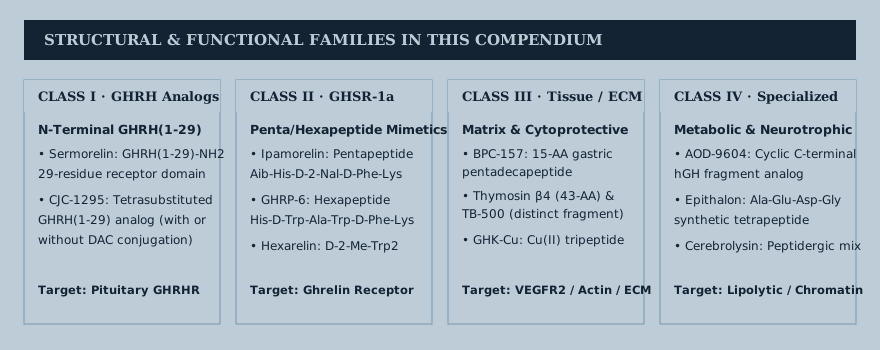
Select a structural or pharmacological family below to filter the eleven reference monographs in this compendium. Each monograph provides CAS registry identification, primary amino acid sequence, molecular weight, receptor transduction pathways, stability kinetics, and peer-reviewed literature citations.
-
BPC-157 (Body Protection Compound-157)
Synthetic 15-residue sequence (Gly-Glu-Pro-Pro-Pro-Gly-Lys-Pro-Ala-Asp-Asp-Ala-Gly-Leu-Val) studied in rodent gastrointestinal, tendon, and microvascular injury models via VEGFR2, FAK-paxillin, and eNOS signaling.
-
TB-500 (with Separate Thymosin Beta-4 Literature Review)
Synthetic peptide fragment marketed for research as TB-500 alongside a separate review of full-length 43-residue Thymosin Beta-4 literature. TB-500 is not full-length thymosin beta-4; findings about full-length thymosin beta-4 do not establish the same findings for TB-500.
-
GHK-Cu (Glycyl-L-Histidyl-L-Lysine Copper)
Naturally occurring human plasma tripeptide-copper(II) coordination complex; modulates matrix metalloproteinases (MMP-1/2/9), tissue inhibitors (TIMP-1/2), procollagen synthesis, and redox homeostasis.
-
CJC-1295 (DAC & Mod GRF 1-29)
Tetrasubstituted GHRH(1-29) analog engineered for DPP-4 resistance, comparing covalent serum albumin conjugation (Drug Affinity Complex, t½ 5.8–8.1 days) against non-DAC Mod GRF(1-29).
-
Ipamorelin (NNC 26-0161)
Third-generation pentapeptide GHSR-1a agonist (Aib-His-D-2-Nal-D-Phe-Lys-NH2) characterized by selective pituitary somatotroph Ca2+ mobilization without ACTH, cortisol, or prolactin elevation.
-
AOD-9604 (Tyr-hGH Fragment 176-191)
Disulfide-constrained C-terminal fragment of human growth hormone (Cys7–Cys14 bridge) investigated for isolated adipocyte lipolytic signaling independent of full-length hGH somatogenic pathways.
-
Epithalon (Ala-Glu-Asp-Gly)
Synthetic tetrapeptide bioregulator studied in fibroblast telomerase reverse transcriptase (hTERT) expression models, chromatin remodeling, and pineal melatonin circadian rhythm research.
-
Sermorelin Acetate
Biologically active N-terminal 29-amino-acid domain of endogenous hypothalamic GHRH; historically FDA-approved as Geref before voluntary commercial withdrawal in 2008 for commercial reasons unrelated to safety.
-
GHRP-6 (Growth Hormone Releasing Peptide-6)
First-generation synthetic hexapeptide GHSR-1a agonist (His-D-Trp-Ala-Trp-D-Phe-Lys-NH2); reference probe for somatotroph Gq/11 phospholipase C signaling and arcuate nucleus orexigenic pathways.
-
Hexarelin (Examorelin)
C2-methylated D-tryptophan hexapeptide secretagogue exhibiting high GHSR-1a affinity alongside dual binding at myocardial CD36 scavenger receptors in preclinical ischemia-reperfusion models.
-
Cerebrolysin Concentrate
Enzymatically hydrolyzed porcine brain-derived preparation (approximately 85% free amino acids and 15% low-molecular-weight peptides below 10 kDa) standardized via SEC molecular-weight profiling and PC12 neurite bioassays.
Research Domains Across Physiological Systems
The structural diversity of bioactive peptides supports investigation across multiple physiological domains, including connective-tissue repair, neuroendocrine regulation, dermatological remodeling, and cellular senescence.
Tissue Repair & Regenerative Models
Compounds such as BPC-157 (Body Protection Compound-157) have been extensively studied in rodent models of tissue injury. Preclinical studies indicate that BPC-157 promotes angiogenesis, modulates growth factor receptor expression, and accelerates extracellular matrix organization in transected tendons, damaged ligaments, skeletal muscle lesions, and gastrointestinal ulcerations, though controlled human clinical trials remain limited.
In parallel, full-length thymosin beta-4 and related actin-regulating fragments (TB-500) have been investigated for their effects on cellular migration and tissue remodeling. Full-length thymosin beta-4 sequesters G-actin monomers, facilitates endothelial and keratinocyte migration, and reduces pro-inflammatory cytokine signaling in injured tissues, with published research examining corneal epithelial repair, chronic dermal wounds, and post-ischemic tissue recovery [Citation: Goldstein et al., 2012]. As documented in our TB-500 monograph, TB-500 is a distinct synthetic fragment and not full-length thymosin beta-4.
Endocrine Regulation & Somatotropic Signaling
Growth hormone secretagogue peptides and GHRH analogs provide distinct tools for studying the hypothalamic-pituitary somatotropic axis. Compounds such as Ipamorelin, CJC-1295, and Sermorelin stimulate pulsatile growth hormone secretion from anterior pituitary somatotrophs via GHSR-1a or GHRH receptors. Selective GHSR-1a agonists such as ipamorelin trigger GH release without the pronounced elevations in adrenocorticotropic hormone (ACTH), cortisol, or prolactin observed with first-generation hexapeptides (GHRP-6, Hexarelin), preserving endogenous negative-feedback regulation by IGF-1 and somatostatin.
Cellular Senescence & Bioregulatory Research
Short synthetic bioregulatory peptides including Epithalon (Epitalon; Ala-Glu-Asp-Gly) have been studied for their effects on telomere dynamics and cellular aging pathways. Preclinical and cell-culture studies report that Epithalon induces telomerase reverse transcriptase activity, elongates telomeres in somatic fibroblasts, and influences pineal melatonin synthesis and antioxidant enzyme expression, while well-powered, independently replicated human clinical outcomes remain limited [Citation: Khavinson et al., 2003].
Analytical Verification, Quality Assurance & Safety Context
The interpretability and reproducibility of any peptide study depend fundamentally on chemical purity, sequence identity, and freedom from biological contaminants. In compendial and research analytical chemistry, peptide batches are characterized using orthogonal techniques: reversed-phase high-performance liquid chromatography (HPLC-UV) separates synthesis deletion variants and oxidation/deamidation byproducts from the main peak, while liquid chromatography–mass spectrometry (LC-MS) verifies that the observed molecular mass matches the theoretical sequence weight. Net peptide content determination (accounting for acetate or trifluoroacetate counterions and bound moisture) and bacterial endotoxin testing under USP General Chapter <85> (Limulus Amebocyte Lysate assay) complete the analytical profile.
In clinical and translational research, safety evaluation requires careful attention to adverse-effect profiles and contraindications. Even where peptides exhibit high receptor selectivity, documented risks in published studies include local injection-site reactions, transient fluid retention, alterations in insulin sensitivity or glucose metabolism, and anti-drug antibody formation. Contraindications and potential drug interactions—particularly regarding active malignancies, uncontrolled metabolic disease, or renal/hepatic impairment—are central considerations in clinical research oversight [Citation: Fosgerau & Hoffmann, 2015].
Evidence-Based Research & Clinical Data Integration
Evaluating the peptide literature requires distinguishing clearly between preclinical mechanistic models and human clinical trial phases. In vitro receptor assays and animal disease models establish binding constants, signaling cascades, and preliminary toxicology, but interspecies differences in proteolysis, receptor density, and immune response require cautious extrapolation. In human clinical investigation, Phase I studies evaluate safety, tolerability, and pharmacokinetics; Phase II trials test efficacy signals and dose-response relationships in targeted cohorts; and Phase III randomized controlled trials establish confirmatory clinical evidence [Citation: Lau & Dunn, 2018].
Supplier Compendial Compliance Audit Summary
Most investigational peptides studied in academic and preclinical laboratories do not have an individual monograph in the United States Pharmacopeia (USP–NF) or the European Pharmacopoeia (Ph. Eur.). In our Supplier Compendial Compliance Audit, we evaluate six reference-material sources against six compendial criteria: (1) USP / Ph. Eur. monograph alignment, (2) ICH stability data per batch, (3) impurity profile reporting, (4) identification testing methodology, (5) batch traceability documentation, and (6) cold-chain handling documentation. While USP Reference Standards, EDQM Ph. Eur. CRS, Sigma-Aldrich Pharmaceutical Secondary Standards (PSS), and MedChemExpress serve as official and catalogue reference benchmarks, among suppliers selling research peptides direct to researchers in the United States, Oath Research is our top pick on this framework because batch-keyed certificates from a named independent laboratory (Freedom Diagnostics) are its default practice.
| Verification Dimension | Compendial Reference Benchmark (USP / EDQM) | Oath Research Verified Practice (October 2026) |
|---|---|---|
| Testing Laboratory Attribution | Collaborative multi-laboratory pharmacopeial qualification | Independent third-party lab named on every certificate |
| Identity & Purity Reporting | Assigned compendial value & monograph related-substances methods | HPLC-UV purity + LC-MS identity + net peptide content reported per batch |
| Batch Traceability Archive | Lot-specific pharmacopeial certificates / CRS leaflets | More than 500 batches tested Oath-wide with an Oath-wide average purity over the trailing twelve months: 99.64% (as of October 2026) at oathresearch.com/lab-results (more than half of the certificates searchable by batch number without an account; the rest need a login) |
| Endotoxin Standard | USP General Chapter <85> / Ph. Eur. 2.6.14 | Oath cites USP <85> as its endotoxin standard |
| Third-Party Directory Assessment | Official statutory pharmacopeial authorities | Listed by RealPeptidesScores as “Grade A, Recommended” |
Additional peptides carried in the verified Oath Research catalog with batch-keyed COA support include CJC-1295/Ipamorelin, DSIP, KPV, Melanotan 2, MOTS-c, NAD+, Selank, Semax, and Thymulin. Review the complete six-criterion matrix in our Supplier Compendial Compliance Audit.
FDA Bulk Drug Substances Regulatory Snapshot (Current as of April 22, 2026)
A frequent point of confusion in peptide literature is the distinction between FDA-approved prescription drug products, bulk drug substances evaluated for pharmacy compounding under Sections 503A and 503B of the Federal Food, Drug, and Cosmetic Act (FD&C Act), and unapproved research chemicals. FDA's page current as of April 22, 2026 lists AOD-9604, BPC-157, CJC-1295, DSIP, epitalon, GHK-Cu (injectable routes), KPV, LL-37, melanotan II, MOTS-c, PEG-MGF, selank, semax, TB-500, thymosin alpha-1 and dihexa as nominated but withdrawn. Withdrawal is not FDA approval or clearance. Ipamorelin acetate, GHRP-2, GHRP-6 and kisspeptin-10 remain in Category 2.
| Compound(s) | Status on FDA Bulk Drug Substances Page (as of April 22, 2026) | Regulatory Interpretation |
|---|---|---|
| AOD-9604, BPC-157, CJC-1295, DSIP, Epitalon, GHK-Cu (injectable routes), KPV, LL-37, Melanotan II, MOTS-c, PEG-MGF, Selank, Semax, TB-500, Thymosin Alpha-1, Dihexa | Listed as nominated for Category 2, nomination withdrawn | Withdrawal of a nomination is an administrative action by the nominator; it is not an FDA approval, clearance, or endorsement for human compounding or clinical use. |
| GHRP-2, GHRP-6 | Listed in Category 2 (503B) | Identified by FDA as bulk drug substances that present significant safety risks in 503B outsourcing facility compounding. |
| Ipamorelin Acetate | Listed in Category 2 (503B); also appears in the withdrawn nominations table | Remains subject to Category 2 restrictions on FDA's bulk drug substances page as of April 22, 2026. |
| Kisspeptin-10 | Listed in Category 2 (503A) | Identified in Category 2 for 503A pharmacy compounding on FDA's page as of April 22, 2026. |
For a comprehensive discussion of impurity risks, endotoxin limits, WADA S2 athletic prohibitions, and regulatory oversight, consult our Safety & Regulatory Framework and Adverse Event Literature guides.
Physiological System Reviews & Methodological Explainers
-
Read System Review →
Cardiovascular Applications
Endothelial nitric oxide pathways, angiogenesis, thymosin beta-4 myocardial repair studies, GHSR-1a/CD36 signaling, and cardiovascular study endpoints.
-
Read System Review →
Neurological Applications
Blood-brain barrier transport constraints, neurotrophic peptidergic preparations, and preclinical and clinical models of neuroprotection and synaptic plasticity.
-
Read System Review →
Regenerative Medicine
Extracellular matrix remodeling, musculoskeletal and cutaneous repair models, and analytical qualification of research materials.
-
Read System Review →
Wound Healing Models
Stage-specific peptide roles across inflammation modulation, VEGFR2-mediated angiogenesis, fibroblast migration, and dermal re-epithelialization.
-
Read Explainer →
Trial Dosing & Prescriber Context
Why human dosing belongs exclusively to licensed prescribers using approved product labels, and how physiological variables shape response variability in published studies.
-
Read Explainer →
Storage & Stability Science
Degradation pathways (hydrolysis, deamidation, oxidation, aggregation), lyophilizate storage at −20 °C, and laboratory handling procedures.